
Das Netzwerk Alpiner Schutzgebiete
The 30th edition of the traditional Memorial Danilo Re will be hosted by Triglav National Park and will take place from January 22 to 25, 2026, in Kranjska Gora, Slovenia.
As in previous years, the event will feature the ALPARC General Assembly, held alongside the Danilo Re Trophy sporting competitions. The Ranger Seminar will also take place, offering valuable insights into the work of protected area rangers.
We look forward to getting together, exchanging ideas, competing – and celebrating Alpine friendship!
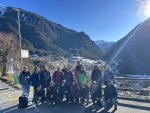
From 9–11 December 2025, the first meeting of the new ALPARC CENTR’ALPS event series “Networking Nature Conservation” took place at Parc Ela in Lantsch/Lenz (Switzerland), focusing on environmental education and the ranger profession. Representatives from Switzerland, Germany and Austria took part in the meeting, covering a wide range of protected area categories.
The project “Networking Nature Conservation” is an association-funded initiative aimed at strengthening the work of protected areas, intensifying their cooperation and improving ecological connectivity. A key element of the project is exchange events for experts from protected areas, enabling them to share experiences, discuss common challenges and further develop new insights in a practice-oriented way. During the meeting, it became clear that, despite differing national frameworks, protected areas face similar challenges. At the same time, it was evident that the Alps, as a transnational natural and cultural landscape, share many common characteristics that foster close cross-border cooperation.
One thematic focus was the ranger profession. The different training paths, task profiles and organizational structures in the individual countries and protected area categories were presented. Differences already exist in terminology: for example, in the Swiss National Park, park wardens largely carry out the tasks that are performed by rangers in Germany and Austria. In addition, differences in available human and financial resources between the various protected area categories were discussed.
Another focus was on environmental education. Participants presented a wide variety of environmental education activities, whose exchange in a shared pool could promote synergies and save resources. In particular, the concept of mobile information stands, which gained importance during the COVID-19 pandemic, was discussed as a practical and flexible tool for visitor information and awareness-raising.
In addition to the expert inputs, joint ideas for future cooperation and concrete opportunities for collaboration were developed in workshop formats. The open exchange contributed significantly to mutual learning and to developing shared perspectives for further project work.
We would like to thank the committed participants as well as the hosts from Parc Ela and the Network of Swiss Parks, who made the meeting an extremely interesting and productive event in both content and organization.
The next meeting of the event series, focusing on “Digital Tools in Park Management” and “Biodiversity Monitoring”, is already scheduled for 27–29 April 2026 and will take place at the Nagelfluhkette Nature Park. The relevant information documents have already been published on our website.
The project is funded by the BfN (German Federal Agency for Nature Conservation) with funds from the Federal Ministry for the Environment, Nature Conservation, Nuclear Safety and Consumer Protection (BMUKN).
© Image: ALPARC
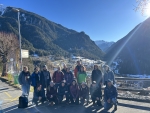
Vom 09.-11.12.2025 fand beim Parc Ela in Lantsch/Lenz (Schweiz) das erste Treffen der neuen ALPARC CENTR’ALPS-Veranstaltungsreihe „Naturschutz vernetzt“ zu den Themen Umweltbildung und Berufsbild Ranger statt. Am Treffen nahmen Vertreterinnen und Vertreter aus der Schweiz, Deutschland und Österreich über verschiedene Schutzgebietskategorien hinweg teil.
Das Projekt „Naturschutz vernetzt“ ist eine Verbändeförderung mit dem Ziel, die Arbeit der Schutzgebiete zu stärken, ihre Zusammenarbeit zu intensivieren und die ökologische Vernetzung zu verbessern. Ein zentrales Element des Projekts sind Austauschveranstaltungen für Expertinnen und Experten der Schutzgebiete, die es ermöglichen, Erfahrungen zu teilen, gemeinsame Herausforderungen zu diskutieren und neue Erkenntnisse praxisnah weiterzuentwickeln. Im Rahmen des Treffens zeigte sich, dass die Schutzgebiete trotz unterschiedlicher nationaler Rahmenbedingungen vor ähnlichen Herausforderungen stehen. Gleichzeitig wurde deutlich, dass die Alpen als transnationaler Natur- und Kulturraum zahlreiche Gemeinsamkeiten besitzen, die eine enge grenzüberschreitende Zusammenarbeit begünstigen.
Ein inhaltlicher Schwerpunkt lag auf dem Berufsbild der Rangerinnen und Ranger. Dabei wurden die unterschiedlichen Ausbildungen, Aufgabenprofile und organisatorischen Einbindungen in den einzelnen Ländern und Schutzgebietskategorien vorgestellt. Bereits bei den Begrifflichkeiten bestehen Unterschiede: So übernehmen bspw. im Schweizerischen Nationalpark die Parkwächter weitgehend jene Aufgaben, die in Deutschland und Österreich von Rangerinnen und Rangern wahrgenommen werden. Zudem wurden Unterschiede in den verfügbaren personellen und finanziellen Ressourcen zwischen den Schutzgebietskategorien thematisiert.
Ein weiterer Fokus lag auf der Umweltbildung. Die Teilnehmenden stellten eine große Vielfalt an Umweltbildungsangeboten vor, deren Austausch in einem gemeinsamen Pool Synergien fördern und Ressourcen sparen könnte. Insbesondere wurde das Konzept mobiler Informationsstände, das während der Corona-Pandemie an Bedeutung gewonnen hat, als praxisnahes und flexibles Instrument der Besucherinformation und -sensibilisierung diskutiert.
Neben den fachlichen Inputs wurden im Workshop-Format gemeinsame Ideen für eine zukünftige Zusammenarbeit sowie konkrete Kooperationsmöglichkeiten entwickelt. Der offene Austausch trug wesentlich dazu bei, voneinander zu lernen und gemeinsame Perspektiven für die weitere Projektarbeit zu entwickeln.
Unser Dank gilt den engagierten Teilnehmenden sowie den Gastgebern vom Parc Ela und dem Netzwerk Schweizer Pärke, die das Treffen inhaltlich wie organisatorisch zu einer äußerst interessanten und produktiven Veranstaltung gemacht haben.
Das nächste Treffen der Veranstaltungsreihe zu den Themen „Digitale Werkzeuge im Parkmanagement“ und „Biodiversitätsmonitoring“ ist bereits für den 27.–29.04.2026 terminiert und wird beim Naturpark Nagelfluhkette stattfinden. Die entsprechenden Informationsdokumente sind bereits auf unserer Webseite veröffentlicht.
Das Projekt „Naturschutz vernetzt“, wird durch das Bundesamt für Naturschutz (BfN) mit Mitteln des Bundesministerium für Umwelt, Klimaschutz, Naturschutz und nukleare Sicherheit (BMUKN) gefördert.
© Image: ALPARC
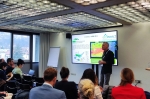
Within the framework of the EUSALP Annual Forum, ALPARC, together with EUSALP AG7, co-organized the workshop “Ecological connectivity in and around the Alps: strategic partnerships towards implementation”.
This workshop brought together participants from infrastructure, spatial planning, environment, and nature protection sectors to discuss: How ecological connectivity is being implemented within the Alps, the main challenges and future perspectives.
The session was opened by Miro Kirstan (AG7) and Katharina Zwettler (BMLUK), and provided an opportunity to present:
Overview of the milestones for ecological connectivity in the Alps and the recent progress on the project Last Corridors of the Alps by ALPARC
Practical examples from Austria highlighting the importance of cross-sectoral coordination, including contributions from: The Austrian National Coordination Platform for Habitat Corridors – Florian Danzinger | The Federal Ministry of Innovation, Mobility and Infrastructure (BMIMI) - Elke Hahn | ASFINAG – Ulli Vielhaber | ÖBB-Infrastructure – Thomas Schuh
The workshop concluded with a panel discussion on challenges and perspectives, aligning strategic goals with local spatial planning and implementation, with the intervention of representatives from the Alpine Convention – Claire de Kermadec, AG7 – Miro Kirstan, and ALPARC – Guido Plassmann.
The Last corridors – Analysis and evaluation of the Alpine Ecological Network project is financed by the Austrian BMLUK.
© Image: ALPARC
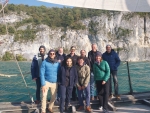
In October, the ALPARC Administration Council gathered in Annecy, France, for its second annual meeting.
ALPARC President Peter Oggier opened the meeting with the words, “Never before have protected areas known each other as well as they do now”, highlighting the strong bonds and achievements resulting from 30 years of cooperation within the Alpine Network of Protected Areas.
Against the backdrop of this important anniversary, members looked back on key milestones reached over the past decades and discussed future priorities and next steps for the network. The meeting also marked the launch of the “Friends of ALPARC”, an initiative bringing together people who have been actively involved in the network and contributed to its development over the years, fostering continued exchange and connection with ALPARC.
The meeting concluded with a boat excursion on Lake Annecy and a visit to the Roc de Chère Nature Reserve, offering an inspiring example of local conservation efforts.
A warm thank you goes to Asters - Conservatoire d’espaces naturels de Haute-Savoie and ALPARC Vice-President Christian Schwoehrer for their kind hospitality and excellent organization.
© Asters
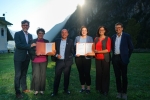
In September, during an anniversary event, the National Park Triglav, the Julian Prealps Nature Park, and the Dobratsch Nature Park formally agreed to strengthen their close cross-border cooperation. This marks the beginning of an even deeper partnership between Slovenia, Italy, and Austria, aiming to jointly implement projects in biodiversity conservation, sustainable development, and environmental education.
Located in the heart of Europe, the area covered by the three parks unites not only major cultural and linguistic regions – the Slavic, Romance, and Germanic – but also significant Alpine ranges such as the Julian and Carnic Alps, the Karavanks, and the Gailtal Alps.
The Three-Country Peace Park aims to extend its impact far beyond the region itself – serving as a model for sustainable development, a bridge between cultures, and a symbol of a united Europe.
© Triglav National Park
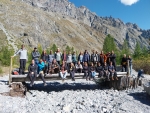
The journey of LiveAlpsNature (Interreg Alpine Space) through the project’s pilot sites continues. The third meeting took place from September 30th to October 2nd in Vallouise (FR), in one of the valleys of the Parc National des Écrins.
Just over a year into the project, the first results are taking shape. Two surveys were launched over the summer in the partner protected areas and collected over 1,200 responses from visitors and over 130 from tourism operators. Once analyzed, this data will contribute to the overview of the current situation and ongoing trends in the Alps regarding nature-based activities. The study of the impacts of these activities on species disturbance and habitat fragmentation is also underway, through analysis of spatial data, case studies and insights from experts. Another noteworthy outcome is the development of the BREATHE Index. Intended as an evaluation tool to assess the potential of natural areas to promote human health, it will guide the design of innovative offers based on the One Health approach.
During the meeting, participants also worked together on the many ongoing project activities. These include the definition of a protocol to better integrate verified data from protected areas (e.g. official trails and regulations) into digital platforms, and the development of climate scenarios to predict how global warming will influence outdoor practices and how this evolution will, in turn, affect biodiversity.
The field excursion led by rangers and researchers from the Parc National des Écrins provided an opportunity to further explore this last aspect. Starting from Pré de Madame Carle, participants walked through a landscape shaped by two glaciers, the Glacier Blanc and the Glacier Noir, both rapidly shrinking. This sparked discussion about the links between climate change and tourism. As an example, phenomena like glacier retreat increase risks from landslides and floods, posing a threat to visitor safety. On the other hand, rising temperatures make higher altitudes (and alpine lakes) more attractive for people, causing disturbance to biodiversity in remote areas and potentially affecting fragile ecosystems emerging from recently deglaciated zones. In this context, monitoring visitor flows, through underground counters or analyses of the most common activities, plays a crucial role in guiding management strategies that ensure human frequentation aligns with the core goal of nature conservation.
The next stop of the LiveAlpsNature journey will be the Parco Naturale Mont Avic (IT)!
For more information about the project: https://www.alpine-space.eu/project/livealpsnature/
The LiveAlpsNature project is co-funded by the European Union through the Interreg Alpine Space programme, which supports cross-border cooperation projects between seven Alpine countries.
© photo: Parc National des Écrins / Aurore Seignemartin
The project PlanToConnect is co-funded by the European Union through the Interreg Alpine Space programme, which supports cross-border cooperation projects between seven Alpine countries. ALPARC is co-founded in this project by the German Ministry for the Environment, Climate Action, Nature Conservation and Nuclear Safety (BMUKN).
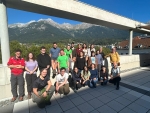
The AlpsLife project (INTERREG Alpine Space) continues its journey with the second consortium meeting, held in Innsbruck on 18-19 September. Many partners had already gathered on 17 Septemer during the International Mountain Conference, where a dedicated session on mountain regions as key biodiversity observatories featured strong participation from AlpsLife partners.
After nearly a year of work, the first results are beginning to take shape, even as discussions remain lively. Within the work package on the Application and evaluation of an early warning system for biodiversity in the Alpine Protected Areas and beyond, that is led by ALPARC and see as main characters the project’s protected area partners, 30 questionnaires have been completed. The questionnaires collection will continue until the end of 2025, but these questionnaires have already provided valuable insights into monitoring schemes and management measures across Alpine protected areas in the whole Alpine Arc. This marks an important milestone, offering a solid foundation for the next steps and for the selection of indicators that will be crucial in conceptualising the early warning system.
A key moment of the consortium meeting was a workshop organised by the protected area partners, focusing on four major biodiversity components commonly monitored across the Alpine arc: ungulates, grouses, alien species, and flora (general monitoring). Each discussion table soon delved into the core issues, comparing monitoring methods across different protected areas and identifying the minimum thresholds needed for data sharing and comparability. These exchanges laid the groundwork for the early stages of the early warning system’s conceptual development.
The field excursion took participants by funicular and cable car on the Nordkette, in the mountains overlooking Innsbruck of the Naturpark Karwendel. There, together with staff from the Nationalpark Kalkalpen, participants explored the Tyrolean mountain landscape and engaged in discussions on ecological topics such as landscape connectivity and fragmentation (made especially tangible by the panoramic view over the city) and the feasibility of comparing monitoring data across different protected areas. Insights from the Kalkalpen team enriched the conversation with past experiences.
The next consortium meeting of AlpsLife will be in Annecy (FR), hosted jointly by ALPARC and ASTERS!
For more information about the project: https://www.alpine-space.eu/project/alpslife/
The AlpsLife project is co-funded by the European Union through the Interreg Alpine Space programme, which supports cross-border cooperation projects between seven Alpine countries.
© photo: ALPARC / Dominik Greiderer
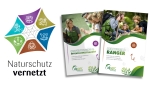
ALPARC CENTR’ALPS hat nun die ersten beiden Info-Broschüren im Projekt „Naturschutz vernetzt“ veröffentlicht. Darin werden die Themen „Umweltbildung & Öffentlichkeitsarbeit“ und „Berufsbild Ranger & Weiterbildung“ behandelt.
Die Info-Broschüren sind nur in deutscher Sprache verfügbar und können hier gelesen oder heruntergeladen werden:
www.alparc.org/de/brochures-networking-nature-conservation
Weitere Themen werden folgen!
Die Info-Broschüren dienen als Grundlage für ein gemeinsames Verständnis von sechs zentralen Naturschutz-Themen. Dabei werden jeweils der Status Quo und die gegenwärtigen Herausforderungen genauer beleuchtet. Das Aufzeigen innovativer Lösungsansätze sowie bereits bestehender Best-Practice-Beispiele soll mögliche Wege aufzeigen, diese Herausforderungen gemeinsam anzugehen. Generelle sind die Info-Broschüren, wie folgt strukturiert:
Projektkontext & Zielsetzung
(bestehende) Programme & Projekte
Innovative Ansätze
Netzwerke und Strukturen
Fazit und Ausblick
Die Info-broschüren dienen als Basis für ein gemeinsames Verständnis der aktuellen Herausforderungen in den Schutzgebieten. Darauf aufbauend werden in den nächsten 12 Monaten gemeinsame Treffen organisiert, bei denen sich Expertinnen und Experten der alpinen Schutzgebiete zu den Themen austauschen und vernetzen können.
Die Info-Broschüren sind Teil des Projekts „Naturschutz vernetzt“ (www.alparc.org/de/networking-nature-conservation), das durch das Bundesamt für Naturschutz (BfN) mit Mitteln des Bundesministerium für Umwelt, Naturschutz, nukleare Sicherheit und Verbraucherschutz (BMUV) (DE) gefördert wird.
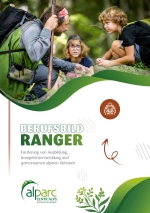
Berufsbild Ranger
Förderung von Ausbildung, Kompetenzentwicklung und gemeinsamen alpinen Aktionen.

Dieses Informationsdokument ist im Rahmen des Projekts „Naturschutz vernetzt“, das durch das Bundesamt für Naturschutz (BfN) mit Mitteln des Bundesministerium für Umwelt, Klimaschutz, Naturschutz und nukleare Sicherheit (BMUKN) gefördert wird, entstanden.
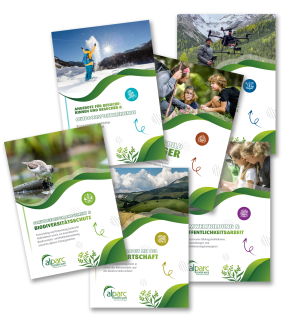
• Berufsbild Ranger
• Digitale Werkzeuge für das Parkmanagement
• Umweltbildung & Öffentlichkeitsarbeit
• Zusammenarbeit mit der Landwirtschaft
• Angebote für Besucherinnen und Besucher & Outdoorsporttreibende
• Schutzgebiets-management & Biodiversitätsschutz